



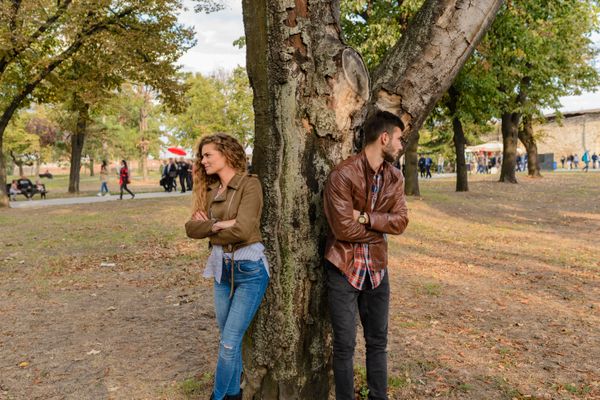
Human beings do not suffer because life takes something away from them. They suffer because they confuse what is with what they imagine.
They believe they are meeting another person, while in reality they are first meeting their own memory. They do not see the other as they truly are; they see the reflection of their expectations, wounds, unmet desires, and need for security.
They are not looking at a face; they are looking into a mirror.
Thus, they unconsciously create an identity around the one they love: the partner who will finally fill the void, the friend who will never betray them, the parent who will provide what was always missing, or the guide who will dissolve all uncertainty.
Then they call it love.
Yet this is not love—not yet. It is an attempt to preserve an inner image in order to avoid confronting their own sense of lack.
The other becomes the guardian of a fragile balance. As long as they play the role assigned to them, we feel safe. But the moment they stop matching our script, everything begins to shake.
We believe we are losing a person, while in reality we are losing an illusion.
And that illusion served a purpose: it protected an identity built upon separation, need, and fear.
Pain, therefore, is not the consequence of change itself. It is the resistance of the old self that refuses to die.
Every disappointment is an invitation to distinguish between what belongs to reality and what belongs to our mental construction.
The other is not responsible for the image we have created of them. They merely reveal the limits of our perception.
Consciousness grows precisely when that image begins to crack.
What seemed to be a loss becomes a birth.
For as long as we need someone to be a certain way in order to feel whole, we remain prisoners of our own projections.
True love begins when the other ceases to be a means of satisfying our lack and becomes once again a free being, carrying their own path, rhythm, and truth.
At that moment, we no longer seek to possess, hold on to, or transform.
We simply witness.
We no longer ask the other to complete us because we discover that life never removes the being itself; it removes only the images to which the ego clung in order to continue existing.
And this is where the true reversal occurs.
Every image that collapses releases energy that was trapped within a belief.
Every expectation that disappears creates more space for presence.
Every illusion that dies reveals a wider consciousness.
Then we understand that love is not the fusion of two lacks, but the meeting of two beings who no longer need to define themselves through one another.
The other is no longer an object of projection.
They become a presence that reveals us to ourselves.
And as the veils continue to fall, it is not only the other whom we discover.
It is our own Being—one that had never ceased to exist behind all the images.
